Dear community newsrooms: Thank you for showing up
Welcome back! This is our first edition after a mini-hiatus, and we're here on Election Day with some bright spots to inspire you as we await poll closures and results.
This fall I went looking for election coverage that treats readers like neighbors with a decision to make, and I found plenty. A statewide budget gap became a game that thousands of people played. Local stories came with a toolbox that told readers where to show up and what to do. A county election guide began with a survey of residents and ended with another. A Spanish-language guide was built for readers who have real reasons to feel afraid at the polls.
Each of these started with a practical question: what does this community need to know before it votes, and in what form will people actually use it? The best of these added a third: how will we know it worked?
That question matters for every publisher reading this, and it matters well beyond Election Day. Listening first, meeting people where they are and giving them something to do are the same habits that build trust, loyalty and eventually revenue.
Below you will find three tools to adapt, a closer look at Enlace Latino NC and a funding radar with deadlines that start this week. Let's get into it.
📋 The Playbook: Election Tools With an Eye Toward Impact
Local newsrooms are increasingly asked to demonstrate civic impact. These three teams built the measuring into the product, so they can show what readers did, what changed and what helped. Each can be scaled down to fit a small team.
- Let readers make the trade-offs. The Colorado News Collaborative built Colorado Tradeoffs, an interactive app that put people in lawmakers' shoes to balance a projected $1.6B state budget gap, with choices tied to three statewide ballot measures. We’ve seen budget tools before — what stood out about this iteration? COLab’s engagement tracking showed how many people used it (8,000+, per executive director Laura Frank), how many balanced their budget (700+), and perhaps most interestingly, how many changed their minds after engaging with the tool (about 13%). See it in action.
- Make your stories (actually) actionable. Planet Detroit’s Civic Action Toolbox is one of the most scalable approaches to civic engagement I’ve seen. The toolbox, embedded in article pages, gives readers a roadmap to civic action: why the issue matters, who’s making decisions, upcoming deadlines and meetings with calendar links, and a host of other next steps. This Ann Arbor Proposal E coverage shows the box in action. Learn more about how the team prototyped the tool and how they’re planning to pilot it with newsrooms around the nation. Every box is also a measuring tool: the team tracked 300 civic actions from 100 unique readers in one 28-day window.
- Listen early, then listen again. Santa Cruz Local started its Nov. 3 election guide the way it does every cycle, by asking residents what they need from candidates: a five-minute survey, plus interviews and listening sessions across the county. Housing, homelessness, road safety and engagement with constituents topped the list, and those priorities shaped the questions put to candidates. The guide was built for access, too. It was available in English and Spanish and explained how to get a Spanish ballot, how to vote with assistive technology and how to register without a mailing address. Their guide to a proposed half-cent sales tax was built for deciding: it laid out the ballot text, what a yes and a no vote meant, what the tax would add to a $100 purchase and the arguments on both sides, then ended with a two-minute survey asking whether readers felt more informed, whether they were more likely to vote, what helped and what was missing. Asking at both ends lets the team compare what residents needed with what the guide delivered.
What to adapt: before you launch your next guide or tool, decide the one thing you will count (a click, a changed mind, a two-question survey) and build a way to count it in from day one.
🌟 Publisher Spotlight: Enlace Latino NC
Who they are. Enlace Latino NC is the first nonprofit, Spanish-language digital newsroom in North Carolina, founded and led by immigrant journalists. It serves the state's Latino immigrant community, with a focus on rural and underserved areas, and reaches readers through WhatsApp among other channels.
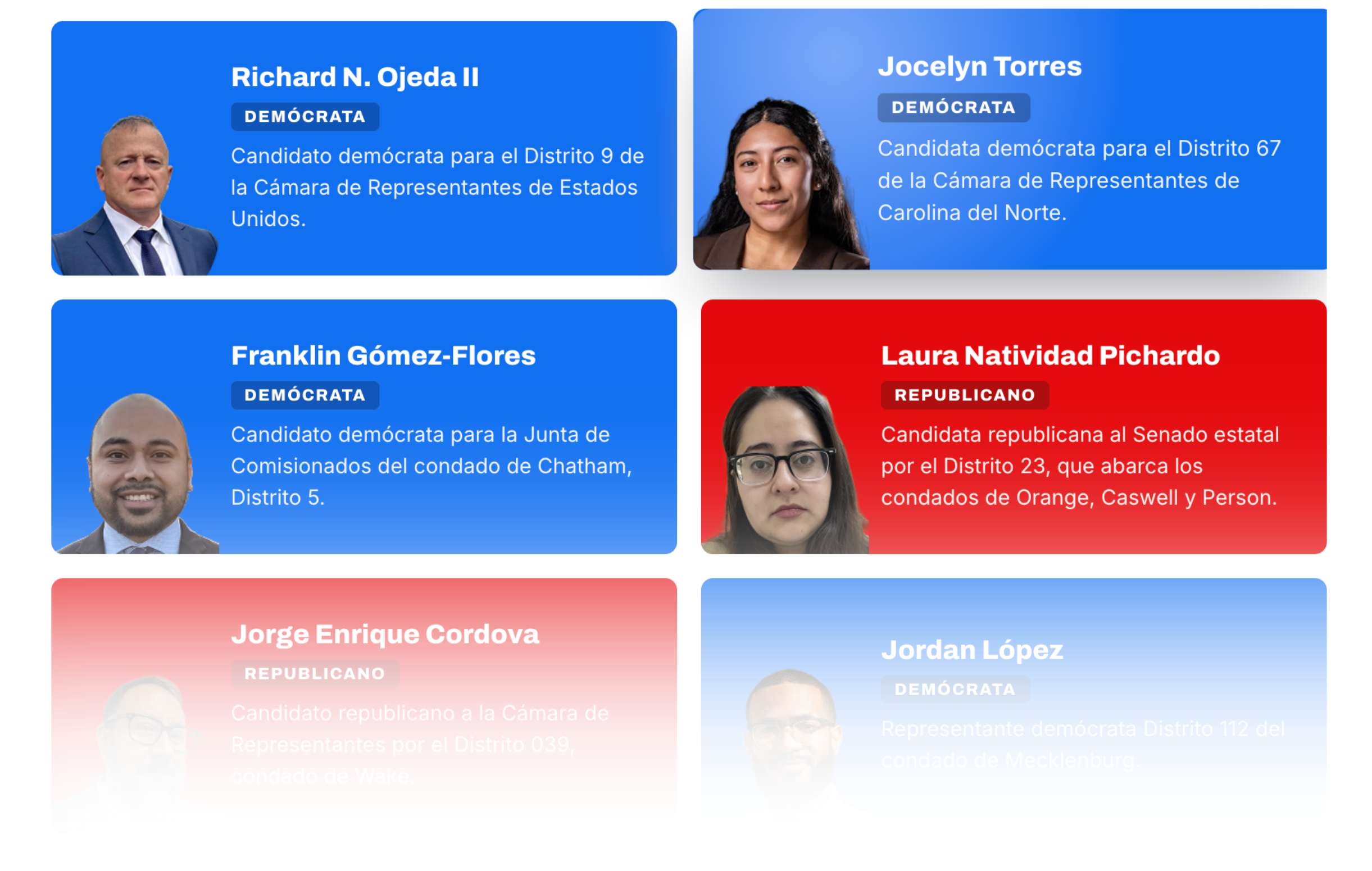
What they're doing that's smart. In January, Enlace published what it calls the North Carolina electoral map, its first county-by-county candidate guide in Spanish. It covered federal, legislative, judicial and local offices along with key deadlines, and it linked to the State Board of Elections sample ballot lookup so each reader could see the races on their own ballot.
For the general election, Enlace built a bilingual 2026 election guide (English | Spanish) centered on Latino voters. It profiled more than 20 Latino candidates running for offices from U.S. House to school board across Democratic, Republican and independent tickets. It also listed the candidates for U.S. Senate, U.S. House and the North Carolina Supreme Court, and walked eligible Spanish-speaking voters through how to vote: key dates, registering, voting early, by mail or on Election Day, ID requirements, voter rights and where to report problems.
In January, NC Newsline reported that Enlace’s coverage arrived as immigration sweeps through North Carolina cities in 2025 had left people afraid to leave their homes. Enlace cofounder Walter Gomez said ICE activity "can become a disruptive factor that discourages many Latino U.S. citizens" from voting. Turnout was already lower: about 56% of Latino voters cast ballots in the 2024 general election, compared with more than 78% of white voters, per state Board of Elections data. Related stories on the guide page addressed those fears directly, including what to do if ICE or police approach voters at the polls and a report on an election protection hotline.
What to adapt. Build guides around the communities you serve. Enlace put candidates who reflect its readers up front, explained how to vote in their language and directly addressed the fears they bring to the polls. A small team can start with one page: the candidates from your community on the ballot, plus the voting steps your readers ask about most.
🚨 Grants, Fellowships & Funding Radar
- SPJ First Amendment Forever Fund — ⏰ Deadline: November 12, 2026, 11:59 p.m. EST — 💰 Up to $2,500 per project — SPJ is funding local and regional advocacy projects led by its chapters, regions and interest-based communities to defend journalists' rights, build public understanding of the First Amendment and protect access to information. Collaborative projects and partnerships are encouraged. Apply here
- South Arts Arts Journalism Grants — ⏰ Deadline: November 20, 2026 — 💰 $5,000 for individual journalists; $10,000 for journalism organizations — South Arts is supporting journalists and news organizations covering arts and culture across the U.S. South, with funding for reporting, freelance assignments, travel and professional development across formats including podcasts, newsletters and investigations. Apply here
- JSK Fellowships — ⏰ Deadline: December 2, 2026, 1 p.m. PT — The John S. Knight Journalism Fellowships are accepting applications for the 2027–28 cohort, a nine-month Stanford-based fellowship for journalists and journalism-support professionals ready to test new ideas and grow as leaders. Apply here
- Type Investigations Springboard Project — ⏰ Deadline: January 8, 2027 — 💰 $10,000 plus coaching and fundraising support — This opportunity supports local newsrooms and publications serving historically underrepresented communities in building investigative journalism capacity, with up to 24 months of coaching and training. Apply here
- RJI Professional Innovation Fellowships — ⏰ Deadline: January 8, 2027 — 💰 $75,000 to $100,000, depending on fellowship type — The Reynolds Journalism Institute is offering fellowships for journalists, consultants and researchers building tools, platforms or resources that newsrooms and journalists nationwide can use. Learn more here
📬 One Thing to Try This Month
Send it by text, email or WhatsApp, whichever channel they already use with you, and save the replies in one doc. Those answers tell you what to build before the next election, and a line or two from them (with permission) makes a strong opening for your year-end appeal.
To every community-first newsroom keeping elections independent, accessible and understood: thank you for keeping our democracy powered. ✌️
az
Audience Almanac is a monthly newsletter from Agencia Media — delivering practical frameworks, funding leads and community-first models for publishers doing the work. Subscribe and share.