
How (and why) to TAM
Estimated read time: ~6 minutes
Mary Oliver once wrote that “attention without feeling is just a report.” She meant it about art and poetry. But this year, I've been reflecting a lot on what this means for journalism.
We've long defined our primary role as the recorders — we bear witness, we get the facts straight, we maintain a healthy distance from the story. But if we report without empathy, without a vested interest in what happens to the people about whom we're reporting, we end up producing field guides to disaster, when what communities actually need is something closer to care.
That's the thread running through this issue of Audience Almanac, with Annemarie Dooling and Summer Nettles describing what it looks like to meet people before you meet the story — to show up with genuine presence. And the TAM work I've been running with publishers is, at its core, the same exercise: getting specific enough about who you're actually for that content and care lands measurably — with intention.
We can't show up for communities we haven't named; we can't assess our impact without knowing what they need. Let's get to it.
📋 The Playbook: Size Your Audience Like You Mean It
Earlier this year, I ran a coaching sprint with Tiny News Collective — 10 publishers, 1:1 conversations, all focused on translating mission language into a measurable audience definition.
The framework is simple:
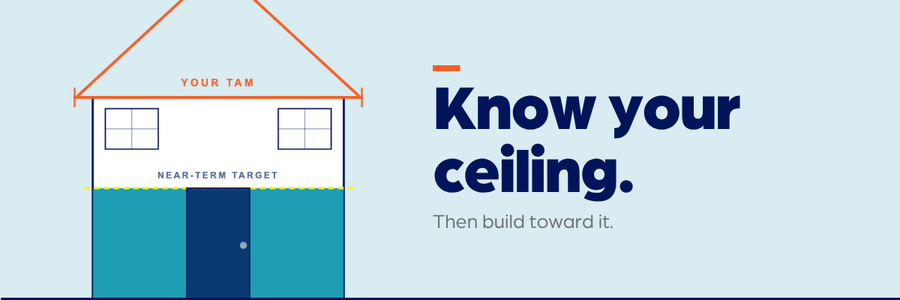
One primary segment × one primary geography × one measurable proxy = a TAM you can defend.
TAM (total addressable market) is a startup term. But adapted for mission-driven publishing, it becomes a defensible estimate of how many people exist in the world you say you serve — one you can use to chart realistic growth that funders can get behind.
The key concept is the proxy. When what you care about isn't directly measurable — "people who care about civic life," "Spanish-speaking residents who want local news" — you need a measurable indicator that's directionally aligned with your mission. Voter turnout rates. Broadband access. Bilingual household data from the census.
Two patterns from the cohort worth noting:
- A publisher in a news desert had applied such restrictive demographic filters that their TAM came out unrealistically small — undermining both their confidence and their pitch. We rebuilt it using voter turnout as the proxy: population × turnout rate × newsletter consumption assumptions. The result: a realistic near-term subscriber target and a funder-ready story about civic participation. More honest about the actual opportunity, and sharper than demographic slicing.
- A high-performing outlet had the opposite problem: their TAM was "all adults in the metro area." Technically defensible, strategically inert — it didn't tell funders anything about who they were actually building for. Narrowing to "civically engaged residents" with a measurable proxy made the number smaller and the pitch significantly stronger.
The publishers who moved fastest had one thing in common: they were willing to choose. "We serve underrepresented communities" is true. It's also impossible to size.
Run this before your next funder conversation:
- Write one sentence: We primarily serve [segment] in [geography].
- Find one public data source that approximates that group (census, voter rolls, research institute data).
- Apply a realistic consumption assumption.
- That's your TAM v1. From there, your near-term target becomes a share of that number — a claim you can explain and update as you learn more.
💰 Grants, Fellowships & Funding Radar
- Eugene C. Pulliam Fellowship for Public Service Journalism — ⏰ Deadline: June 29, 2026 — 💰 Amount: up to $100,000 — SPJ’s fellowship gives a mid-career journalist time away from daily responsibilities to pursue in-depth public service reporting, research, study, or travel. The work is expected to result in published projects such as editorials, investigative series, podcasts, or books.
- Kapor Foundation Research Fellowship — ⏰ Deadline: rolling; first awards announced June 30, 2026 — 💰 Amount: $35,000 — The Kapor Foundation is supporting journalists producing long-form investigative reporting and tech policy researchers, with an emphasis on responsible AI and tech ethics. The current cycle notes that applications are being accepted on a rolling basis.
- Tarbell Center for AI Journalism grants — ⏰ Deadline: July 12, 2026 — 💰 Amount: $1,000–$20,000 — Tarbell is accepting pitches for original reporting on AI, including accountability reporting on frontier AI companies, AI policy and politics, explainers and analysis, AI in government and militaries, labor impacts, and AI developments in China.
- SPJ Foundation Grants Proposal Guidelines and Procedures — ⏰ Deadline: August 13, 2026, 11:59 p.m. ET — 💰 Amount: not listed — The SPJ Foundation is accepting proposals for projects that strengthen journalism and protect the public’s right to know, with priority for press freedom, media literacy, public trust, and collaborative or regional-to-national efforts.
🤝 From the Field
Collaborative Journalism Summit, Philadelphia (May 14) I moderated a conversation with Annemarie Dooling of The Platia, an independent, Philadelphia-based outlet embedded in mutual aid networks across the city, and Summer Nettles of Greater Purpose Media — two journalists who've left institutional newsrooms to work directly inside their communities. Annemarie runs Narcan trainings and food distribution in Philadelphia; Summer Summer covers environmental issues and policy from inside the communities most affected in Denver.
Three things worth taking back to your work:
1️⃣ Meet people before you meet the story. After covering an encampment where residents had refused shelter — and had been poorly covered by local press — Annemarie drew a direct line between that experience and how journalism too often arrives at a community: "Go meet the people before we meet the story — to really think about who we're talking about before we just go out and say, here's this crazy story happening over here. But like, who actually are those people?"
2️⃣ Ask whether you're helping materially, not just informationally. Annemarie's newsletter of volunteer opportunities gets an 85% open rate — because her readers asked for it. Her question: "Are we doing [this work] materially, or are we doing that with articles, and then forgetting them five days later?"
3️⃣ In crisis, lower your voice. Summer: "Our job is to make that information available to people. It's not to exacerbate the situation." Harder than it sounds when the algorithm rewards alarm.
More from our conversation at CJS ➔
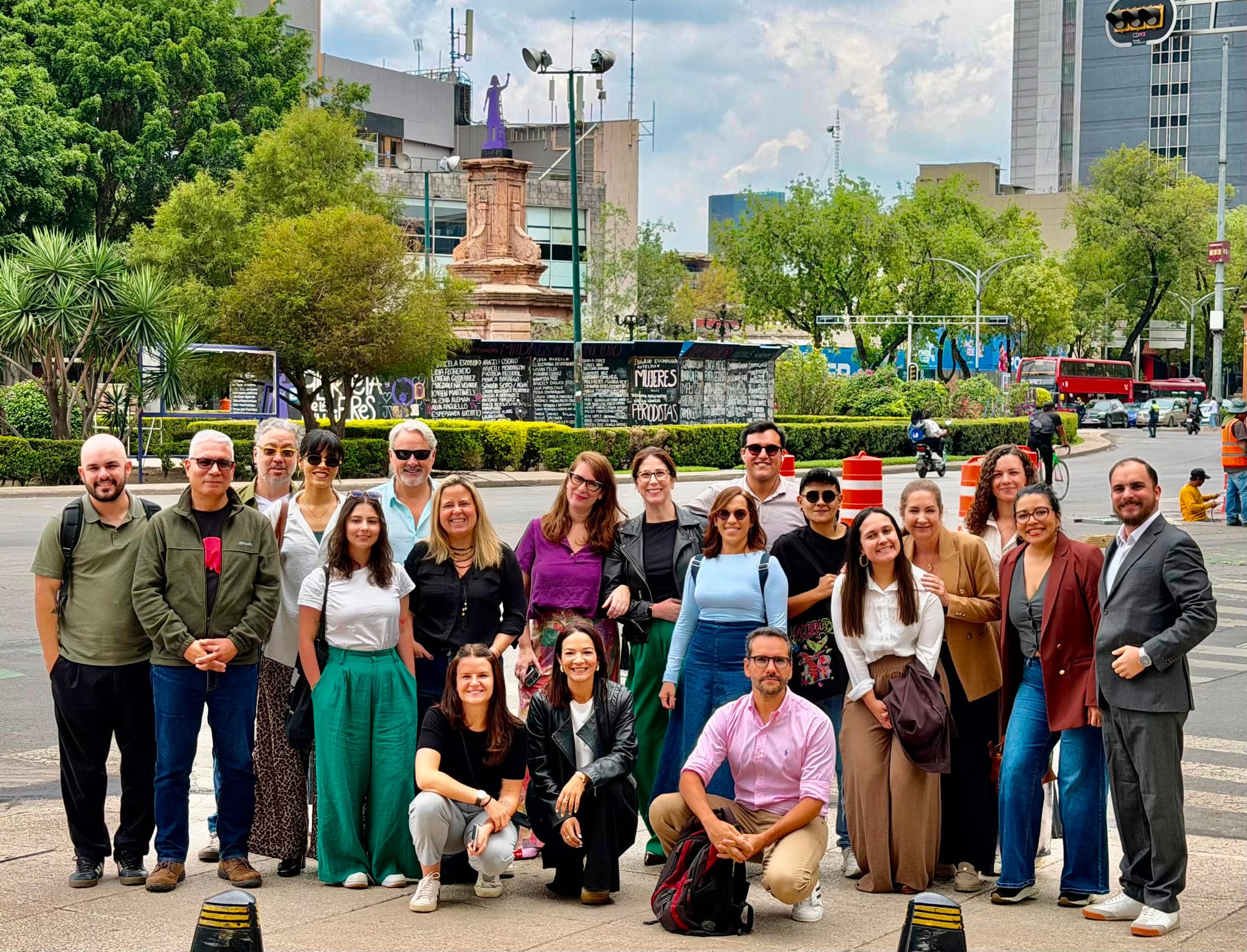
Latin American Media Sustainability Seminar, Mexico City (June 3–5) I co-facilitated a two-day seminar with the great Mijal Iastrebner for journalists and media executives from across Latin America. The Center for Media Integrity of the Americas workshop represents the first time I've run the full Audience Almanac framework (define, listen, build, sustain) internationally. Publishers navigating very different political and economic contexts, but working through the same fundamental question: how do you build an audience relationship durable enough to sustain independent journalism? Thanks to CMIA for bring us in, and to the incredible journalists who leaned right into the work with us.
📬 One Thing to Try This Month
Before your next reporting project, call two or three people in your community who live and breathe that topic — not for quotes, but for orientation. ASK: what should we be paying attention to right now? What are we getting wrong? Give it 20 minutes per call. Then ask whether the story you planned to tell is still the right one.
Community listening doesn't require a venue. It requires a phone and the willingness to be surprised.
Audience Almanac is a monthly newsletter from Agencia Media — delivering practical frameworks, funding leads and community-first models for publishers doing the work.
— Have something we should feature? Just reply to this email. — Know a publisher who could use this? Forward it along.
Thanks for reading! Amanda ✌️